Categories
April 2026

Dear Students,
As Student Success Coaches, we would like to take this opportunity to reach out and communicate with you directly. We understand that your academic journey can be challenging, but please know that we are here to support you every step of the way.
We want to remind you that your success is our top priority. We are here to provide you with guidance, resources, and support to help you achieve your academic goals. Whether you need assistance with time management, study skills, or navigating the university, we are here to help.
It is important to remember that you are not alone in this journey. For this reason we have created this entry to provide you with a direct message and to be able to contact us more directly. We hope you enjoy.
Student Success Coaches
Share on Social Media
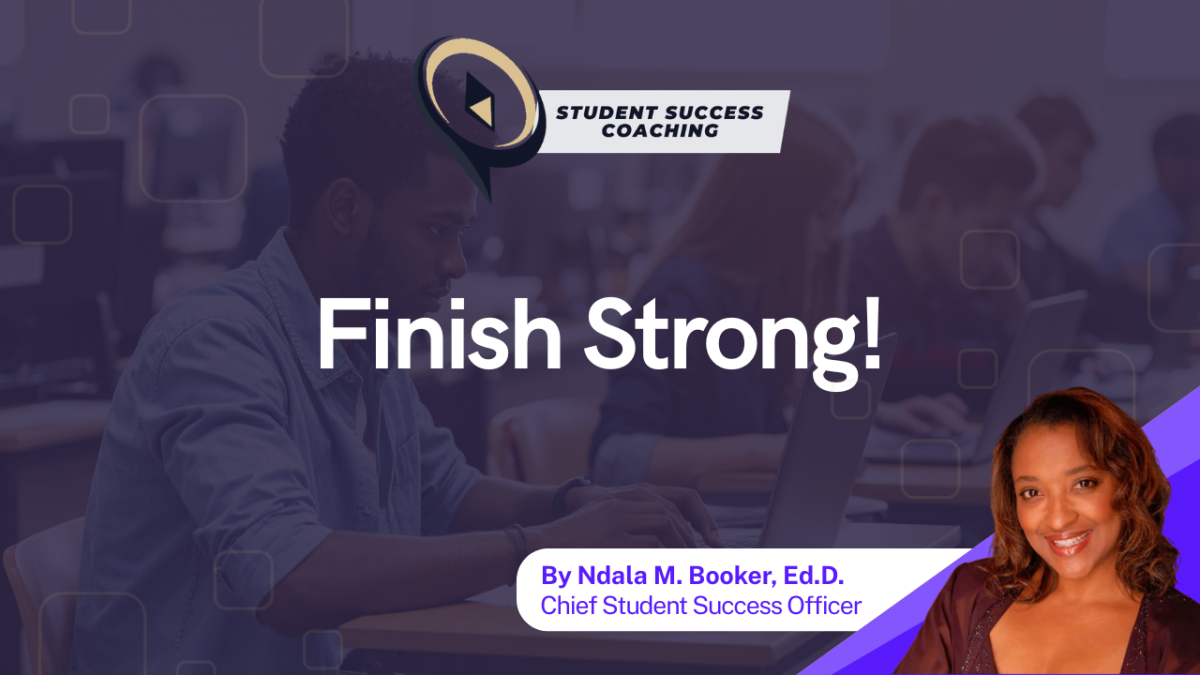
Spring is in full swing! For most universities, spring break has come and gone, and we’re rapidly approaching graduation season. To all our scholars nearing the finish line—early congratulations! You’ve worked hard to get here, and we’re cheering you on as you complete this important chapter.
Speaking of the Finish Line…
Now is the time to finish strong. We know senioritis is real—that end-of-semester fatigue that makes it tempting to coast through these final weeks. But here’s the truth: the finish line is not the time to let up. Stay on target. Keep your eyes on your goal.
Dust Off Your Critical Thinking Skills
With everything the world offers students today—AI tools, apps that solve problems instantly, endless shortcuts at your fingertips—it’s easy to let your critical thinking skills go dormant. But don’t let the cobwebs settle in! Critical thinking is a vital skill, even in the age of AI. Actually, especially in the age of AI.
Think of it like learning your math facts even though you have a calculator. Everything is fine until you’re in the store one night, trying to figure out if you have enough cash for what’s in your cart, and your phone dies. You need to be able to think things through and solve your own problems.
Algorithms can give you answers, but they can’t teach you how to think. They can’t help you discern truth from noise, analyze complex situations, or make sound decisions under pressure. Those are skills you build—and skills you must keep sharp.
Keep Your Eyes on the Goal
When students take their eyes off their ultimate goal, it’s easy to fall off track. Academic coaches can help you get back on course, but once your GPA falls, it can be tough to pull it back into a safe zone.
So here’s our challenge to you this April:
Stay focused on what you came here to accomplish
Use the study skills you’ve acquired throughout the semester
Don’t hesitate to ask for help when you need it
Tutoring centers, academic coaches, peer mentors, faculty office hours—they’re all here to help you reach your goal. Use them. Don’t wait until it’s too late.
You’ve Got This!
You didn’t come this far to only come this far. Finish strong. We’re rooting for you every step of the way.
Wishing you a focused, productive, and successful April!
Share on Social Media
From Google Workspace and NotebookLM to Canva and ChatGPT, how to use tech as a study ally.
Online learning is no longer a backup plan; it’s a primary pathway for millions of students. Whether enrolled in fully remote programs or hybrid courses, today’s learners need more than motivation and discipline; they need digital skills.
But here’s the problem: most students are given access to technology without being taught how to use it strategically. Having tools is not the same as knowing how to learn effectively with them.
At FocusQuest, we see digital literacy as more than technical knowledge. It’s the ability to turn technology into a study ally; one that supports focus, organization, creativity, and deeper understanding.
Below are the essential digital skills every student needs to succeed in online learning, plus how to use modern tools intentionally instead of reactively.
One of the biggest challenges in online learning is information overload. Assignments, links, PDFs, slides, emails, group chats; it adds up quickly.
Students who thrive online develop strong digital organization habits. This means knowing how to structure files, track deadlines, and centralize materials.
Platforms like Google Workspace allow students to manage documents, collaborate in real time, and store files in structured folders. Using Google Docs for shared notes, Google Drive for categorized storage, and Google Calendar for assignment tracking creates a clear learning ecosystem.
Digital organization isn’t about perfection. It’s about reducing cognitive clutter so the brain can focus on understanding, not searching.
Artificial intelligence is reshaping education. But using AI effectively requires skill, not shortcuts.
Tools like ChatGPT can support learning when used intentionally. Instead of asking for answers, students can:
Similarly, NotebookLM helps students synthesize information from their own documents, summarize readings, and identify patterns across notes.
The key digital skill here is critical engagement. AI should enhance thinking, not replace it. Students who ask better questions get better learning outcomes.
Online learning often requires presentations, digital portfolios, and collaborative projects. Visual literacy is no longer optional.
Tools like Canva help students design presentations, infographics, and study visuals that clarify complex ideas.
But the skill isn’t just design, it’s translation. Can you transform a dense chapter into a visual summary? Can you present research in a way that’s engaging and understandable?
Visual communication strengthens comprehension and improves retention. When students redesign information, they process it more deeply.
Technology is both a resource and a distraction. Notifications, social media, and multitasking can fracture attention.
Digital focus management includes:
Success in online learning depends on intentional digital boundaries. Tools are powerful, but only when students control them.
Online education often requires teamwork across time zones and platforms. Knowing how to communicate clearly in shared documents, discussion boards, and virtual meetings is essential.
Students who succeed remotely know how to:
These digital communication skills mirror real-world expectations and increase academic confidence.
With so much content available online, students must develop discernment. Not every source is reliable. Not every AI-generated response is accurate.
Critical digital literacy includes:
The goal isn’t just consuming information,it’s evaluating it.
The future of education is digital, but digital doesn’t mean passive. The most successful online learners are not the ones with the most apps. They’re the ones who use tools intentionally to support clarity, structure, and reflection.
Digital skills for students are no longer optional. They are foundational to academic success in online learning environments.
When students combine digital organization, AI literacy, visual communication, focus management, and critical thinking, technology becomes an amplifier, not a distraction.
At FocusQuest, we guide students in building both academic and digital confidence. Learning online shouldn’t feel chaotic or overwhelming. With the right strategies, technology becomes a partner in growth, supporting deeper understanding and sustainable success.
If you’re navigating online education and want to strengthen your digital learning skills, explore resources designed to help you study smarter, stay organized, and build confidence in today’s evolving academic landscape.
Digital organization, AI literacy, focus management, communication skills, and information evaluation are among the most critical for success in online education.
It depends on how they’re used. When AI is used for clarification, practice questions, or concept exploration, it can enhance learning. Submitting AI-generated work as original without permission may violate academic policies.
Turning off notifications, using website blockers, and structuring timed study sessions can significantly improve focus.
Yes. Translating information into visual formats helps students process and retain concepts more effectively.
Online learning environments require students to manage information, collaborate remotely, and use digital tools efficiently. These skills support both academic performance and long-term adaptability.