FocusQuest®

Categories
For School For Students News Partners

Pentagon announces Howard University as the first HBCU to lead university-affiliated research center

Pentagon announces Howard University as the first HBCU to lead university-affiliated research center

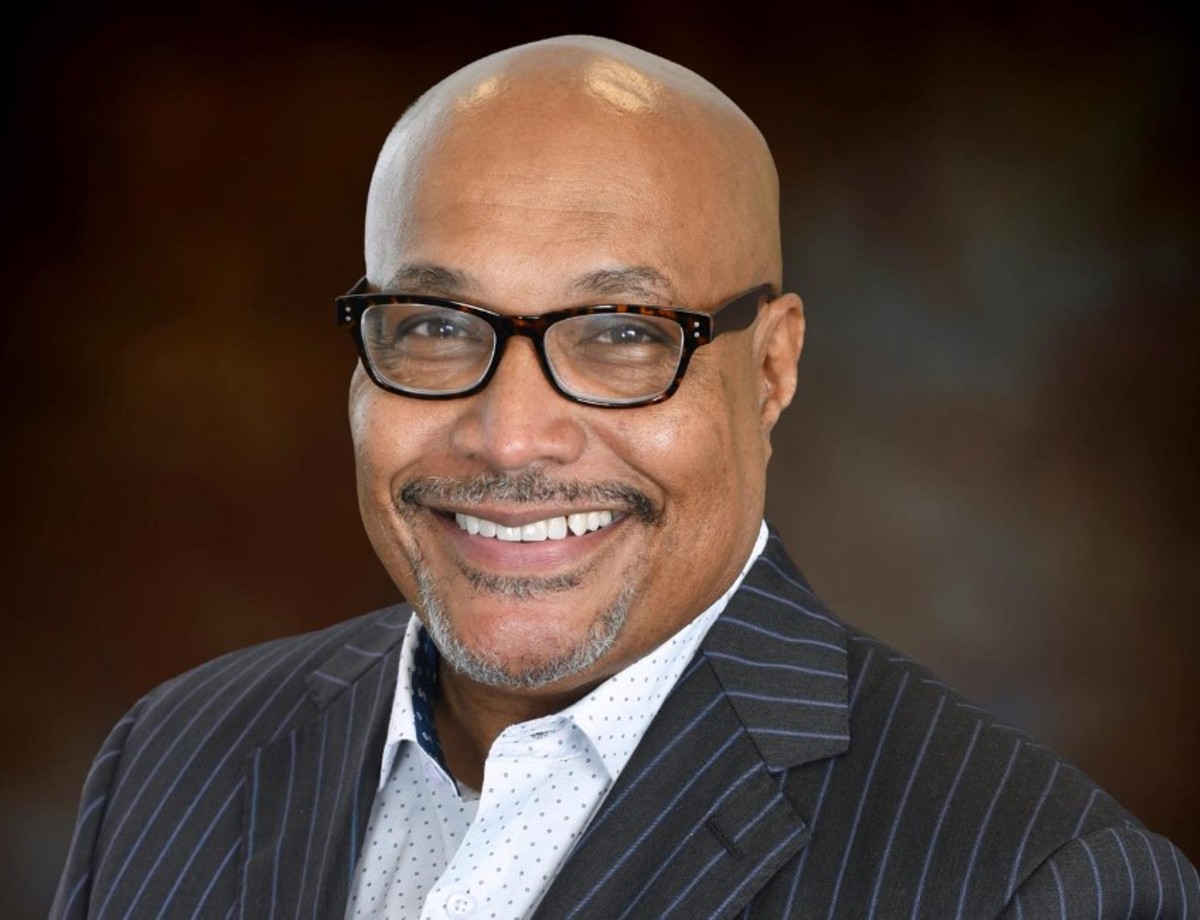
The Pentagon has chosen Howard University to lead a university-affiliated research center, its first partnership with a historically Black college or university, Defense Secretary Lloyd Austin announced this week.

“To sharpen America’s technological edge and to strengthen America’s outstanding military, the department is committed to investing even more in HBCUs and minority-serving institutions,” Austin, the first Black secretary of defense, said Monday.

Howard will receive $12 million per year for five years in funding, according to a news release. This is the first university partnership primarily sponsored by the Air Force, and this is the first time the department accepted submissions from universities to become an affiliated research center, according to Howard University President Wayne A. I. Frederick.

The new consortium will focus on tactical autonomy, an Air Force program that aims to develop technologies that require minimal human supervision, according to the branch’s website. The center looks to take advantage of Howard’s science, technology, engineering and math programs.

Austin described the technology as “central to US security in our changing world” and said the military needs the creativity and ideas of students in these programs to continue advancing the advantages American soldiers have on the battlefield.

“Responsibly used autonomous systems make our military faster, smarter, and stronger,” he added. “Howard’s new research center will protect our most precious asset—and that most precious asset is our men and women in uniform.”

The university will also focus on diversifying the pool of scientists and engineers that work with the Defense Department, according to the news release, and it will lead eight other HBCUs, including Hampton and Tuskegee universities, in the research effort.

Frederick told that this is “an enormous opportunity” for faculty and students to “work on cutting edge research in a technology space that is ever evolving.”

“It’s going to put us in a unique space to develop techniques and capabilities and skillsets that we otherwise wouldn’t,” Frederick said, adding that this partnership will allow the university to expand to other areas of research in the future.

The program “really emphasizes that for the country to be successful and for the country to compete, to continue to be competitive in terms of research, etc., that you have to diversify what that work force looks like in the arena of research,” Frederick said.

The Pentagon currently has partnerships with 14 other universities across the country, including Georgia Institute of Technology, University of South California and the University of Maryland.

From Focus Quest we believe that this announcement of Howard University as the first HBCU to lead a research center affiliated with the university is a significant development that has numerous advantages. This decision will create more opportunities for African American students and researchers to excel in fields that have traditionally been dominated by white scholars. Additionally, it will provide the Pentagon with a more diverse pool of talent and ideas, leading to better solutions and innovations. The research center will also serve as a model for other institutions to follow, promoting the importance of diversity and inclusion in academic and research settings. Overall, this news represents a major step forward in promoting equity and excellence in research and education.

Share on Social Media

facts corner

Featured Articles

_Article Thumbnail Templates FQ (2)
Welcome to December… a month of endings, celebrations, and new beginnings.
As autumn leaves paint our campuses with golden hues, I'm reminded how quickly this year has flown by....
Read More
_Article Thumbnail Templates FQ (2)
The Power of Peer Support: Finding Your Study Tribe
Discover how peer support, study groups, and online communities can boost motivation, accountability,...
Read More
Categories
For School For Students News

What’s The Science? An Examination Of What HBCUs Are Doing With The Bezos Millions

What’s The Science? An Examination Of What HBCUs Are Doing With The Bezos Millions

MacKenzie Scott was married to Amazon founder Jeff Bezos for 25 years before their divorce in 2019. In April of that year, Bezos and Scott reached a settlement in their divorce that gave her a four percent stake in Amazon, valued at $38.3 billion at the time. 


She vowed to give billions away–and has. In July and December 2020, Scott announced $5.8 billion in gifts to colleges and various nonprofit and charitable organizations, The Washington Post reported. Of that, $800 million went to institutions of higher education, with Historically Black Colleges and Universities getting substantial amounts. The charitable donations to HBCUs by Scott, who still had a net worth of $27 billion as of December 2022, were doled out in two parts.

So where did the money go? What are the HBCUs doing with the Bezos millions?

In July, MacKenzie Scott Gave $150 million to HBCUs to six schools: Xavier University, Tuskegee University, Hampton University, Spelman College, Morehouse College, and Howard University. Then she donated more to a slew of HBCUs in December.

As we can see, Jeff Bezos’s $100 million gift to many universities in the United States has far-reaching benefits. The funds will help increase access to education for a greater number of students, improve campus infrastructure, and create new economic opportunities for communities. Additionally, the investment will support research and innovation, promoting scientific discoveries and solutions to global challenges. Most importantly, Bezos’s gift will promote social equity by ensuring that more students from underprivileged backgrounds have access to higher education. All in all, this generous contribution has the potential to transform the lives of countless students and communities for the better.

Share on Social Media

facts corner

Featured Articles

November 2025
Explore Other Issues November 2025 October 2025 September 2025 August 2025 July 2025 June 2025 May 2025...
Read More
_Article Thumbnail Templates FQ
Celebrating ALL Graduates
As autumn leaves paint our campuses with golden hues, I'm reminded how quickly this year has flown by....
Read More
Categories
For School For Students News Partners

How HBCUs Are Helping Reduce the Racial Wealth Gap

How HBCUs Are Helping Reduce
the Racial Wealth Gap

Black households have a fraction of the wealth of white households, leaving them in a much more precarious financial situation when a crisis strikes, such as the pandemic. Wealth allows households to rebound from a financial emergency, invest in their children’s education, start a business, relocate for better opportunities and buy a house. Unfortunately, the wealth gap between white and black Americans has not decreased in the last 50 years. In 2019, the median wealth (without defined-benefit pensions) of Black households in the United States was $24,100, compared with $189,100 for white households. Homeownership contributing significantly to household wealth was 72% for whites compared to 42% for blacks. And the reasons for the black-white wealth gap are not a mystery. They have resulted from centuries of policies that have systematically disadvantaged Black Americans’ ability to build, maintain, and pass on wealth.

Research shows that one of the proven ways to narrow this gap is through higher education, especially for those who graduate in the STEM, legal and medical fields, which offer higher-paying career opportunities. Black professionals have relied on HBCUs more than any ot

her higher education institution for over 180 years. They graduate 80% of Black judges, 50% of Black doctors, 50% of Black lawyers, 40% of all Black US Congress members, and award 24% of all bachelor’s degrees in STEM fields. And while HBCUs have received record funding over the last two years, with more than 6.5 billion allocated by the Federal government, that doesn’t begin to make up for decades of neglect.

Our Money Matters, a free platform to help HBCU students and community residents get on the path to financial wellness, offers six reasons why minority institutions need our continued advocacy.

  1. HBCUs have a 34% mobility rate of moving their students from the bottom 40% in household income into the top 60%. That is double the national average and five times more than Ivy institutions.
  2. Endowments for HBCUs are a fraction of comparable non-HBCUs, with an average of $15,000 per student compared to $410,000. Endowments are typically used to support scholarships, facility upgrades, and faculty hiring and retention. The difference is significant if you compare Howard University, sometimes referred to as the Harvard of HBCUs, and the HBCU with the highest endowment. Harvard’s endowment is about $42 billion, while Howard’s is around $700 million—less than a 50th of Harvard’s endowment. There is not one HBCU with an endowment of over a billion dollars, while there are over 100 white institutions.
  3. The pandemic required HBCUs to shift funds to remote learning. Many students needed computers and access to Wi-Fi, and schools needed to upgrade their technology infrastructure. Also, many students require student loan debt relief as well. This meant that schools diverted crucial funds from maintenance and other infrastructure investments. Nearly two-thirds of the surveyed schools said they had more than 5 million in deferred maintenance.
  4. Private donations and grants are significant funding sources for all higher education institutions. However, it accounts for a small portion of total revenue for HBCUs compared to non-HBCUs – 17% versus 25.8%. And because much private funding comes with certain restrictions, it means less flexibility for HBCUs to address pressing needs. And when HBCUs must turn to other sources for funding, they face higher fees to borrow money than white institutions. For example, a Black minority-serving institution would have to pay underwriters $35,000 more for a $30 million bond than a white university. In addition, historically black colleges and universities in the U.S. have been underfunded for decades, with billions of dollars in state funding diverted by lawmakers for other purposes, according to higher education experts.
  5. First-generation college students make up 39% of HBCU enrollment, and many rely on student loans. While costs at HBCUs are less than at non-HBCUs, tuition is increasing universally across all institutions. This forces many Blacks to choose between a degree and the accompanying astronomical debt or forgoing college altogether. In fact, in a 2021 nationwide survey of nearly 1,300 Black borrowers conducted by the Education Trust, many questioned whether the debt they incurred was worth it. And yet, Blacks that had a degree were much better equipped to weather the pandemic than those without one.
  6. For faculty members, choosing to work at an HBCU means being unfairly penalized in terms of salary. On average, HBCU faculty earn $18,000 less than those teaching in non-HBCU institutions. HBCU faculty earn about $69,180, compared to $87,385 for faculty in non-HBCUs, making it much more challenging to recruit professors and administrators, especially in expensive cities.

HBCUs have traditionally had to do much more with less. And yet, they have positively impacted society to a far greater degree than the historically meager investments made from private and public sources. HBCUs provide an average of 6,385 jobs in each state and territory where they are located and generate an average of $704.7 million a year in total economic impact. They make up just 3% of higher education institutions in the country, but they educate 10% of all Black college students. And according to recent research, increasing the strength of HBCUs around the U.S. could increase Black worker incomes by about $10 billion, strengthening the economy with $1.2 billion in incremental business profit, additional consumer expenditures of $1 billion, and help to reduce the wealth imbalance.

In conclusion, Black History Month is important for HBCUs as it allows these institutions to celebrate the contributions and achievements of African Americans, recognize the legacy of their institutions, and provide a space for students and faculty to learn and share their perspectives.

Share on Social Media

facts corner

Featured Articles

_Article Thumbnail Templates FQ (1)
How to Turn Your Assignments Into Portfolio Pieces 
Learn how to turn your school assignments into professional portfolio pieces that impress employers....
Read More
October 2025
Explore Other Issues October 2025 September 2025 August 2025 July 2025 June 2025 May 2025 April 2025...
Read More
Categories
For School News Partners

4 Ways Universities Can Use AI to Streamline Operations

4 Ways Universities Can Use
AI to Streamline Operations

As enrollment in higher education continues trending down, colleges and universities need to get creative in order to strengthen their margins and maintain profitability. At the same time, they need to figure out how to improve the student experience to buck enrollment trends.

One way to accomplish these goals is by making smart investments in technology. For example, by investing in artificial intelligence (AI) tools—and AI-powered chatbots in particular—institutions of higher learning can provide their students with better support while empowering their staff to focus on higher-level initiatives and tasks.

With that in mind, let’s take a look at four specific ways AI chatbots can help universities and colleges streamline operations and save money to crystallize profitability in the face of declining enrollment.

1. Reducing call and email volume

When you invest in leading chatbot solutions, you empower students to self-serve information at their own convenience. For example, a student might have a simple question about where to send payment or when enrollment opens for the next semester. When extrapolated across thousands of students and prospective students, however, the ability to answer simple questions can be severely hampered, impacting enrollment and retention, thus delivering a negative student experience. A chatbot can easily answer these types of routine questions in higher volumes, freeing staff from having to respond to the same inquiries over and over again while successfully meeting students’ needs.

A full-featured chatbot solution will be available across channels. Whether someone’s going to the website, calling on the phone, sending a text, or shooting an email over, a bot can answer routine questions. In turn, this saves staffers a great deal of time which can be invested in higher-value activities.

With the time saved by implementing a chatbot, you will be able to repurpose your existing staff to handle the more significant and complex interactions with students. For example, a first-generation prospective student might speak with a financial aid advisor to explain that they really want to go to college but they’re not sure if they’ll be able to afford it and want to know more about their financial aid options. This is the type of conversation you want your staff to have the time to engage in. On the flip side, if a new freshman is curious about where the library is located on campus, the chatbot can provide the library address and a map of campus. The vast majority of student inquiries fall into the latter category, making an omnichannel chatbot essential in providing 24/7 access to resources and information.

Recently, one large state university that had been outsourcing calls and emails to a third-party contact center invested in chatbot technology. Thanks to that investment, they were able to deflect 75 percent of calls and messages by utilizing the bot for tier 1 inquiries. Ultimately, this enabled them to bring their contact center back in-house again, saving a significant amount of money along the way.

Similarly, Broward College saved upward of $500,000 using chatbot technology. At the same time, chatbots helped Temple University reduce call volumes by 50 percent.


2. Streamlining the application process

Ultimately, higher education institutions make money when students enroll in school. This is why it’s so important to build a streamlined, optimal application process that maximizes the chances a prospective student will complete it.

This is another area where chatbots can be particularly helpful. For example, if a student begins the application process but walks away midway through it, an AI chatbot can automatically nudge them: “It’s been 10 days since you looked at your application. Is there anything we can do to help you through this process?”

These automatic reminders require no human involvement. They’re an easy way to increase the likelihood that students will complete their applications, which should translate into better enrollment figures. Additionally, the chatbot can have knowledge of each field within the application, allowing the prospective student to ask questions about how to complete the required field. If the bot’s answer isn’t sufficient, an Admissions Advisor can intervene and provide assistance via live chat, increasing the likelihood of application submission.

3. Increasing availability and accessibility

AI chatbots don’t need to eat, sleep, or take breaks. And that means that they work 24 hours a day, seven days a week. Whenever students have questions, they can self-serve answers via the chatbot—even when your entire staff is asleep.

This is a godsend for both traditional students and nontraditional ones, like the folks who have full-time jobs and can’t call admissions during the day. At the same time, leading chatbot solutions offer multilingual support. This enables international students to find the information they need easily, too.

Taken together, this increased availability and accessibility translates into better margins because all student populations have access to the information they need when they need it, which strengthens their experience and improves the chances they’ll ultimately enroll.

4. Improving operational efficiency

Higher education, like all other industries, is having a difficult time hiring enough workers to fulfill their missions. Thanks to chatbot technology, colleges and universities can overcome labor shortages by increasing operational efficiency and enabling staff to do more with less.

At a high level, chatbots improve operational efficiency across campus, which improves the staff and student experience. Instead of having to endure long wait times, students can get answers to their questions quickly, increasing satisfaction.

At the same time, staff can handle calls faster and have better-informed conversations when they need to intervene. Rather than being forced to track down information from their colleagues to address student concerns, that runaround is eliminated.

What’s more, because chatbots help provide a smoother application and enrollment process, the yield rate increases. And because the chatbot can also nudge students to make account payments automatically, checks come in faster, accelerating cash flow—all without human intervention.

As you can see, chatbots can have a profound impact on university operations, making life easier for staff and students alike. A simple investment in chatbot technology may be just what your university needs to weather the current storm academia faces.

Juneteenth article
Juneteenth and the Power of Education: From Liberation to Legacy
Imagine waiting two extra years for your freedom—only to finally hear the words: "You are free." On June...
Read More
Student Succes Coach
November: Gratitude, Growth, and Getting Your Vote On!
Dear Students, As Student Success Coaches, we would like to take this opportunity to reach out and communicate...
Read More
Categories
For School For Students News

Top HBCU Rankings 2022: Top Black Colleges

Top HBCU Rankings 2022:
Top Black Colleges

The U.S. News and World Report website have released its HBCU Rankings 2022 list. Every year, the institution publishes a list of the nation’s top Historically Black Colleges and Universities (HBCUs). The U.S. News has made it its mission to help students find the right college fit by providing informative college news, advice, and authoritative rankings.

HBCU Rankings 2022 Criteria
To be considered for this list of the top HBCUs in the United States, schools must meet specific criteria defined by the U.S. News. For one, schools are part of the White House and U.S. Department of Education’s Initiative on Historically Black Colleges and Universities. Secondly, a candidate should be an undergraduate baccalaureate-granting institution focusing on enrolling first-year, first-time students rather than non-traditional students.

Rankings Methodology
Furthermore, colleges and universities included in the rankings should have appeared in the previous year’s Best Colleges rankings. Generally, qualitative and quantitative measures are used to determine the U.S. News and World Report’s rankings. The criteria include student retention, assessments, financial resources, graduation rates, student indebtedness, and more.

79 HBCUs were eligible to be included in the HBCU Rankings 2022 list. However, only 78 ranked HBCUs made it to the list. As you contemplate your college options, here is a list of the top 25 HBCUs, according to the U.S. News, you should keep in mind.

HBCU Rankings 2022: The Top 25 Historically Black Colleges and Universities

Student Succes Coach
Summer Success & Celebrating Your Journey
Can you believe we're already in June? What an incredible year it's been watching you grow, achieve,...
Read More
Untitled design
All the Benefits of Having a Student Success Coach
All the Benefits of Having a Student Success Coach A Student Success Coach (SSC) is an individual with...
Read More
Categories
For School For Students News Partners

Why is Online Education Crucial for Success in the Tech Age

Why is Online Education Crucial for Success in the Tech Age

The world of online education is evolving at a rapid pace. With the tech age upon us, online education has become crucial to success in order to stay up-to-date with technology and trends. The following are the reasons online education is crucial for success in the tech age.

It’s Easier To Create A Network

In online courses, you’ll meet a bunch of people you can later stay in touch with and make valuable contacts. The people over at Learning Revolution will explain how crucial networking is for your online education. Creating these communities online can be easier than in person. Plus, online courses allow you to learn from a variety of people and different backgrounds through online discussions with students or even a video chat session with a professor!

The fact that online education is faster-paced also means it’s easier to create connections. It offers more opportunities for networking as there are so many events going on at once! In the tech age, these skills will help you stand out among other job applicants. You’ll have access to experts who know all about what they teach right away if you need them to. So don’t worry about having anything holding you back when starting your online course today!

You Learn Things Schools Don’t Teach

More often than not, formal education will teach you all about your field, but won’t tell you how to make money with it. And online education is the quickest way to learn how to turn your skills and knowledge into profit.

Some things you’ll learn only online include the following:

  • How to market online
  • How you can make money with your skills
  • How to run a business
  • What you need to make it on your own
  • What the market is saying about your field of work

Schools don’t teach you how to turn your skills into profit. You have to do that research yourself, and it takes time away from studying at school.

It Keeps Up With Modern Trends

Following modern trends is essential in the tech age. By taking online courses, students are able to keep up with modern trends while still being in class and learning valuable skills that will help them later on down the line.

Schools don’t have the capacity to keep up with modern trends. Online courses are created by the online education system to keep up with modern trends and help students learn new skills so they can achieve their dreams in life.

Updating one’s self on things like technology is important for success in this day and age, which makes online classes a key part of any student’s learning experience now that schools don’t have the capacity to do it themselves anymore. Keeping up with modern trends without online classes would be impossible as most jobs require constant updating on current events happening around us every single day.

Online Education Is Constantly Being Upgraded

The online education industry is always developing new online platforms, academic courses, and educational paths to ensure that students continue learning online. Students can now choose from a much wider range of online degree options which are constantly being upgraded with the latest technologies available in this day and age.
Online education is one of the best ways for people all over the world to learn new skills or improve on their existing ones because it allows them access to online tools without having to leave home. Plus, online courses are highly convenient as they offer flexible schedules allowing learners complete control over how often they log into their accounts.

It’s A Cost-Effective Way To Get Education

Lots of people choose online courses because this type of education can be an affordable option. This is especially true for online classes since there are no travel costs or other expenses that come with taking a traditional class on campus. Online courses also tend to have fewer restrictions than their in-person counterparts, allowing students the freedom to manage their time and work around personal schedules.

Online Courses Are Flexible


In a fast-paced world, it’s good to have flexible educational options. Unlike brick-and-mortar schools, online courses allow students to take classes that fit into their schedules. The tech age has made the world more mobile than ever before. People are traveling for various reasons at all hours of the day and night. By providing flexible learning opportunities through online education, universities can better help innovative professionals grow in their careers by giving them access when they need it most.

Online education is the way of the future. It’s easier to network and create a community and you’ll learn things schools don’t teach you, like how to run a business. It always keeps up with modern trends and is constantly developing along with the tech industry meaning you won’t leave anything out. Aside from all that, it’s cheaper than formal education and the classes are more flexible meaning you can also focus on developing other fields of interest while learning. Enroll now and go with the flow!

FQ - Jul 5 (1)2
Sacramento State Recognized as First Black-Serving Institution in California
Sacramento State Recognized as First Black-Serving Institution in California Sacramento State has been...
Read More
FQ - Aug 18 (12)
What Does the Tech Industry Value?
What Does the Tech Industry Value? Six experts weigh in on the ethos driving AI development today — and...
Read More
Categories
For School For Students News Partners

College Enrollment Declines Again Though Online Schools, HBCUs See Increases

College Enrollment Declines Again Though Online Schools, HBCUs See Increases

About 1.5 million fewer students are enrolled than before the pandemic, says report from National Student Clearinghouse.

College enrollment dropped for the third consecutive school year after the start of the pandemic, dashing universities’ hopes that a post-Covid rebound was at hand.


The rate of the decline has slowed this fall, with college enrollment dropping 1.1% since last autumn. Over the first two years of the Covid-19 pandemic, enrollment fell about 6.5%, according to the National Student Clearinghouse, a nonprofit that released a report Thursday.

About 1.5 million fewer students are enrolled in college than before the pandemic, according to the nonprofit.

“I certainly wouldn’t call this a recovery,” said Doug Shapiro, executive director of the research center at the National Student Clearinghouse. “After two straight years of historically large losses in student enrollment it’s particularly troubling that the numbers have not climbed back at this point, especially among freshmen.”

Online schools and historically Black colleges and universities were among the few categories of schools to enroll more students in the fall, data show. The shift reflects a change in the way students say they are choosing their colleges. 

University enrollment was sinking for a decade before the pandemic and this year’s rate marks a return to that earlier, slower pace of decline. Factors contributing to enrollment’s long-term slide include concerns about student debt and the rise of alternative credentials.

Less selective private colleges, especially in the Midwest and Northeast have been hardest hit while the most prestigious schools, including most public flagship universities, have maintained strong enrollment numbers, according to the National Student Clearinghouse.

At online schools, where students take classes remotely, enrollment grew 3.2% from last fall, according to the Clearinghouse. For students aged 18-20, enrollment grew 23.4% over two years since fall 2020.


Scott Pulsipher, president of Western Governors University, which enrolled about 200,000 students online last year, said the number of 18-to-24-year-olds jumped to 11% of the student body from 6% five years ago.

Cost and value are attracting young people to online programs, he said. A lot of families can’t afford to pay for the extras colleges charge to enhance the campus lifestyle such as manicured grounds, large gyms and luxurious dormitories. They want to limit their expenses to those associated directly with teaching and learning.

Mr. Pulsipher said online education has evolved since its inception. “We’ve learned how to leverage technology to dramatically personalize learning in a way that can increase cognitive progress,” Mr. Pulsipher said.

 

Ryan Weger, 20 years old, was among the high-school students who enrolled at WGU during the pandemic. He earned a degree in a little less than a year for about $7,000 and now earns $65,000 a year as a data-center tech at Amazon in Northern Virginia. He also earned seven tech credentials while getting his degree.

“When I was considering going to WGU in high school the one con was that I wouldn’t get the campus experience,” Mr. Weger said. “But when I visit my friends in college I don’t feel like I really missed out on that much.”

HBCUs saw an enrollment uptick of more than 6% among freshmen. After years of struggling, HBCUs are on an upswing in the last two years, said Walter Kimbrough, interim executive director of the Black Men’s Research Institute at Morehouse College.

He attributes the increases to a cultural resurgence highlighted by Vice President Kamala Harris, an HBCU alum, as well as greater concern around racism following the 2020 murder of George Floyd. “Families are saying explicitly, I want to send my child to a place where they will feel safe,” Dr. Kimbrough said.

Temitope Soyombo, a freshman at Prairie View A&M University, an HBCU outside of Houston, said the sense of safety informed her decision to enroll. “It just feels better at an HBCU,” she said. “I’m more comfortable talking to my peers.”

The Supreme Court is scheduled to hear a case involving college admissions and affirmative action this fall. If the court decides schools are no longer able to consider race in admissions, Dr. Kimbrough expects that would lead to a boost in HBCU enrollment.

Cheerleaders
College Colors Day
College Colors Day Across the United States students, parents, family, faculty, fans, and alumni celebrate...
Read More
Student Succes Coach
Greetings, Illustrious Scholars! (And yes, that means you!)
Dear Students, As Student Success Coaches, we would like to take this opportunity to reach out and communicate...
Read More
Categories
For School For Students News Partners

IBM Teams With 20 HBCUs to Address Cybersecurity Talent Shortage


IBM Teams with 20 HBCUs to Address Cybersecurity Talent Shortage

20 HBCUs will work with IBM to establish Cybersecurity Leadership Centers, giving students and faculty access to IBM training, software, and certifications at no cost.

During the National HBCU Week Conference convened by the U.S. Department of Education and the White House, IBM (NYSE: IBM) announced its collaboration with 20 Historically Black College and Universities (HBCUs) to help them establish Cybersecurity Leadership Centers.

With 500,000 unfilled cybersecurity jobs in the U.S., the need for expertise is critical: According to a recent IBM Security study, insufficiently staffed organizations average $550,000 more in breach costs than those that state they are sufficiently staffed.**

“Collaborations between academia and the private sector can help students prepare for success. That’s especially true for HBCUs because their mission is so vital,” said Justina Nixon-Saintil, Vice President, IBM Corporate Social Responsibility and ESG. “The Cybersecurity Leadership Centers we’re co-creating with Historically Black College and Universities epitomize our commitment to the Black community and STEM education; it also builds on our pledge to train 150,000 people in cybersecurity over three years.”

IBM will collaborate with the following 20 HBCUs across 11 states to co-create Cybersecurity Leadership Centers, helping to create talent for employers and opportunities for students. (Six of these collaborations were previously announced in May*)

  • Alabama – Alabama A&M University, Talladega College, Tuskegee University
  • Florida – Edward Waters University, Florida A&M University
  • Georgia – Albany State University, Clark Atlanta University*
  • Louisiana – Grambling State University, Southern University System*, Xavier University of LA*
  • Maryland – Bowie State University, Morgan State University*
  • Mississippi – Alcorn State University
  • North Carolina – North Carolina A&T State University*, North Carolina Central University
  • South Carolina – South Carolina State University*, Voorhees University
  • Texas – Texas Southern University
  • Virginia – Norfolk State University
  • West Virginia – West Virginia State University

Through IBM’s collaboration, faculty and students at participating schools will have access to coursework, lectures, immersive training experiences, certifications, IBM Cloud-hosted software, and professional development resources, all at no cost to them. This includes access to:

Cybersecurity curricula: IBM will develop for each participating HBCU, a customized IBM Security Learning Academy portal – an IBM client offering – including courses designed to help the university enhance its cybersecurity education portfolio. In addition, IBM will continue to give access to IBM SkillsBuild.

Immersive learning experience: Faculty and students of participating HBCUs will have an opportunity to benefit from IBM Security’s Command Center, through which they can experience a highly realistic, simulated cyberattack, designed to prepare them and train them on response techniques. Moreover, HBCUs’ faculty will have access to consultation sessions with IBM technical personnel on cybersecurity.


Software: Multiple IBM Security premier enterprise security products hosted in the IBM Cloud

Free Person Using Macbook Air Stock Photo
Professional development: Forums to exchange best practices, learn from IBM experts, and discover IBM internships and job openings

About IBM Education

As part of the company’s Corporate Social Responsibility efforts, IBM’s education portfolio takes a personalized, diverse, and deep approach to STEM career readiness. IBM’s pro bono programs range from education and support for teens at public schools and universities, to career readiness resources for aspiring professionals and job seekers. IBM believes that education is best achieved through the collaboration of the public, private, and not-for-profit sectors.

IBM SkillsBuild is a free education program focused on underrepresented communities, that helps adult learners, and high school and university students and faculty, develop valuable new skills and access career opportunities. The program includes an online platform that is complemented by customized practical learning experiences delivered in collaboration with a global network of partners. The online platform offers over 1,000 courses in 19 languages on cybersecurity, data analysis, cloud computing and many other technical disciplines — as well as in workplace skills such as Design Thinking. Most important, participants can earn IBM-branded digital credentials that are recognized by the market. The customized practical learning experiences could include project-based learning, expert conversations with IBM volunteers, mentors, premium content, specialized support, connection with career opportunities, access to IBM software, among others. As of February 2022, IBM SkillsBuild operates in 159 counties and is supporting 1.72M learners since its launch.

About IBM Security

IBM Security offers one of the most advanced and integrated portfolios of enterprise security products and services. The portfolio, supported by world-renowned IBM Security X-Force® research, enables organizations to effectively manage risk and defend against emerging threats. IBM operates one of the world’s broadest security research, development, and delivery organizations, monitors 150 billion+ security events per day in more than 130 countries, and has been granted more than 10,000 security patents worldwide. For more information, please check www.ibm.com/security, follow @IBMSecurity on Twitter or visit the IBM Security Intelligence blog.

* Announced in May 2022
** Cost of a Data Breach Report 2022, conducted by Ponemon Institute, sponsored & analyzed by IBM

Media Contact:

Ari Fishkind
IBM Media Relations
fishkind@us.ibm.com

AtlantaMorehouseCollegeAerial-1024x650
Top 25 Best HBCUs In the US (2024)
Top 25 Best HBCUs In the US (2024) Historically Black colleges and universities, also known as HBCUs,...
Read More
Student Succes Coach
Making the Most of Summer Break
Dear Students, As Student Success Coaches, we would like to take this opportunity to reach out and communicate...
Read More
Categories
For School For Students News

16 HBCU Medical Students Will Work on NFL Staffs (Diversity Initiative)

16 HBCU Medical Students Will Work on NFL Staffs (Diversity Initiative)

16 medical students from four HBCUs will work on the staff of National Football League (NFL) teams this season as part of the NFL’s Diversity Initiative.

The Associated Press reports the 14 students currently attend the Morehouse School of Medicine, the Charles R. Drew University of Medicine and Science, the Howard University College of Medicine, and the Meharry Medical College.

The students will be assigned to one of eight teams: the Atlanta Falcons, Cincinnati Bengals, Los Angeles Rams, Los Angeles Chargers, New York Giants, San Francisco 49ers, Tennessee Titans and the Washington Commanders.

The HBCU students will work with the teams as part of the league’s goal to increase diversity in sports medicine. The initiative is a joint program between the NFL Physicians Society (NFLPS) and the Professional Football Athletic Trainer Society (PFATS).

According to Fox Sports, a recent study examining the diversity of U.S. medical students shows Black students make up just 7.3% of medical students. That figure has risen less than one percent over the last 40 years and is far less than 13.4% of the U.S. Black population.

“My biggest hope through this experience is to inspire youth, especially those from under-represented backgrounds to pursue professions like medicine where they can do incredible things such as sports medicine with the NFL,” Felipe Ocampo, a Charles Drew Medical student, told the AP.

The month-long medical rotations will begin in September. The medical students will get first-hand experience working with an NFL organizations and will work under the supervision of NFL orthopedic team physicians, primary care team physicians, and athletic trainers.

The HBCU medical students will have their work cut out for them. NFL teams are constantly dealing with injured players during the season. According to USA Today, last year, the Baltimore Raves and New York Giants led the league in games missed by injured players with more than 300 games collectively.

Source: shorturl.at/bfMVW

Student Succes Coach
domenico-loia-EhTcC9sYXsw-unsplash
pexels-polina-kovaleva-5717421
Categories
For School For Students News

Kamala Harris Says Attending HBCU Was A Childhood Dream


HBCU Love: Kamala Harris Says Attending Howard Was A Childhood Dream Actualized

SEN. KAMALA HARRIS WAS FIRST INTRODUCED TO HOWARD UNIVERSITY AS A CHILD. YEARS AFTER GRADUATING SHE CREDITS IT AS THE PLACE THAT FOREVER CHANGED HER LIFE.

When Kamala Harris enters the halls of Capitol Hill, Howard University goes with her. It’s impossible to separate the prominent policymaker from the institution that helped define her career. The place that nurtured her into the woman she is today.

Before she ever ran for the district attorney of San Francisco, the Attorney General of California, a U.S. Senate seat or the president of the United States, a 17-year-old Harris, ran a successful campaign for the title of freshman class representative of Howard’s liberal arts student council. “That was my first run for public office,” “And when you run for public office at Howard University, you can run for office anywhere.”

Harris quickly learned that the competitive instinct of her college peers was “no joke,” but it was still important for her to hit Howard’s gates running. In addition to serving on the student council, she sparred on the debate team, chaired the economics society and pledged the Alpha chapter of Alpha Kappa Alpha Sorority, Inc. “My aunt Chris, who was the one who really had a big influence on me, was an AKA and pledged at Howard,” Harris reveals. “So it was just very natural for me to want to end up pledging in the sorority which I feel really rounded out my experience. It’s a sisterhood that lasts till today.”

Though Howard was on the opposite side of the country from the Bay Area where she was brought up, the Senator from California contests that it was so similar to the world she had come to know. “I grew up in a community that was, in part, about civil rights, that had a whole piece about the revolution, and collectively it taught me about the nuances of the diaspora.” While still a candidate for president, she’d often say that she spent most of her childhood surrounded by adults who spent their full time “marching and shouting for this thing called justice.” The daughter of an Indian mother and Jamaican father explains that those years prepared her to learn from students who were from all across the Continent, the Caribbean, and different pockets of the United States. “Some of my closest friends were from Detroit and Jersey, the South Side of Chicago. And it was about us coming together and teaching each other new things.”

While Harris’s upbringing laid the foundation for her to spread her wings at Howard, it was her experience at the HBCU that taught her how to soar. She maintains that the years she spent on the D.C. campus developed her for the role she’d play in life and helped her create the identity she would eventually present to the world. Much of that, Harris says, is because Howard ensured there was no excuse to fail. It’s an attribution, she contends, can be ascribed to all Black colleges and universities which have for years played an indelible role in the fabric of this country.

“There’s something special about the investment that an HBCU places in its students,” the staunch HBCU advocate says. “It’s about the nurturing. It’s about refining. It’s about all that goes into making someone transition from being a child into an adult. And in that way, it’s very tough love.”

All the love that the university once showed the distinguished Democrat, is now reflected in Harris’s commitment to ensuring that institutions like Howard are not left behind. Since entering the halls of Congress in 2017, she has proposed bills to preserve their historic buildings and sites, advocated for increased spending, and introduced legislation to ensure that these pillars in the Black community are properly funded.

Harris explains that her interest in protecting these schools is multifaceted. While she’s driven in part by her own experiences, she also knows that to lose them or to have them fall behind the standards of predominantly White institutions, would be a loss for the entire country. “HBCUs have produced so many doctors and scientists, and those labs, because they don’t have the kinds of endowments that other schools have, have not necessarily caught up,” Harris imparts. “When we have research, medical and scientific research, happening at HBCUs, it acts as a function for all the people who come for treatment to those hospitals and helps our awareness then, of cultural and genetic factors.”

The potential VP pick says the work doesn’t end there. “We also need to support teacher programs at HBCUs,” she says. “If you look at the facts and the data, it shows that if a Black child by the end of third grade has had a Black teacher, they’re 13 percent more likely to go to college. If that child has had two Black teachers, they’re 32 percent more likely to go to college. So we need to put money into HBCUs to encourage and create grants for students to become teachers, because I know the generational impact of that.”

Harris first fell in love with her undergraduate alma mater as an impressionable child. “My aunt would talk about it because she went there, and so I always romanticized what Howard is and was,” she admits. And though her Black college experience is far behind her, the memories and the impact is still seen today. At every campaign rally, political appearance, and Senate congressional hearing, you can see her Howard University pedigree peeking out. Being a Bison introduced the attorney, author and HBCU advocate to the women who would give birth to her godchildren and form her support system. It taught her to be fully aware of her capacity and her being. It defined who she was and laid a no-excuses path toward her future dreams.

“Howard University is ‘The Mecca,’ ” Harris avers. “And it was a very special, very special time in my life.”

Source: shorturl.at/aceir

students-studying-table-park_23-2147850714
FQ - Dec (2)
pexels-andrea-piacquadio-3880924
_Article Thumbnail Templates FQ (1)